
Parenting
Why won’t my 2½-year-old listen?
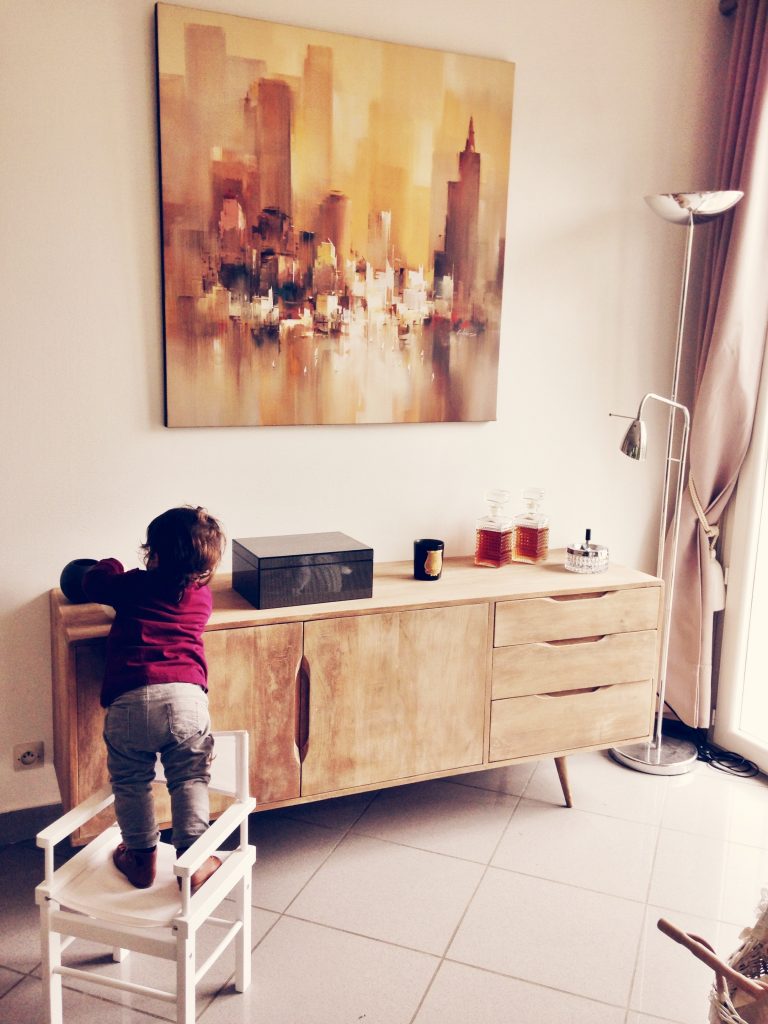
Many of us struggle with the fact that our children don’t listen to us. This problem usually first arises around the age of two, as this is when children start to test their boundaries. We tend to think they’re only doing this to get on our nerves, because they crave our constant attention. But is it really just a desire for our attention that drives them to do this, or is there something else going on in the background?
A mum once told me that her 2½-year-old daughter deliberately does the exact opposite of what she wants. She asked me to suggest some techniques to help her get her child to obey her. We’d like to think that all we need is some quick-fix language or practical tips to „win the battle”. However, to achieve long-term results, we need to understand the ‘whys’! I often run sessions with children present, as they can provide fantastic examples right there and then. At such times, the parents pay attention to me, so the children feel motivated to win their parents’ attention. So let’s take a look at what I observed in the family I mentioned!
During the few minutes I spent observing her, the little girl brought her small stool out of her own room and showed me that, with its help, she could climb up anywhere and reach everything. At first, her mother cheerfully told me how clever her daughter was to have figured this out. Her reactions, however, did not indicate joy or pride, but fear. Every other word she uttered was “No” or “Don’t”. The risk of an accident is real, and her concern is understandable… yet, unfortunately, she is sending messages with serious consequences to her child, who is simply trying to prove herself.
So, why does the child do what he does?
By the age of two or three, children are already able to distinguish themselves from others. They realise that they have control over their own bodies and even over the world around them. On the one hand, this is a huge discovery for them, one that fills them with a sense of self-worth. On the other hand, it opens up the world to them. Their horizons expand, and they are given the opportunity to explore the wider world. Just think about what that must feel like? Perhaps like moving abroad for the first time in our lives. At first, we can only manage small tasks because of the language difficulties, but we become more and more confident, we can handle more and more tasks, and over time we feel: ‘Wow, here I am in a completely different world, all on my own, and I’m standing on my own two feet! I can sort out anything now, nobody can pull the wool over my eyes – I’m simply FREE! The children feel this too. And this motivates them even more to strive and improve.
At first, every child feels very close to their parents. They want to share every discovery with them. To share their joys and show them: “Look at this, what I can do now!” At the age of 2–3, as they realise their own power, they want to become more and more independent. They’re ready to gradually grant their „enslaving” parents more and more freedom. Of course, only if we, as parents, let them! But for that to happen, we too must believe that they’re capable of it.
But what happens if their parents constantly try to control them out of overprotectiveness?
The little girl kept showing both her mum and me, non-stop, “Look at this, I can do this!”, “Look at this, I’ve worked this out!”… She carried her little stool (about 30 cm high) everywhere and stood on it to reach the window, the table, the shelf and the kitchen worktop. Instead of praise, however, she received negative reinforcement. Reinforcement (unintentional on the mother’s part) that she was still small, couldn’t look after herself, would get hurt, and that only Mum knew best. This prompted a response from the child. With every movement, she conveyed the message: „But look, I can do it; I’m a big girl now, can’t you see?” The little girl tried with all her might to convince her mother that she could look after herself.
Now, of course, the question arises: Should we then let the child climb up, even onto the kitchen worktop? Naturally, I don’t think we should let the child do absolutely everything. We need to weigh things up! But if we don’t give them the opportunity and space to gain recognition for their competence (new skills), then two things can happen: If they have a strong personality, there will be constant battles, because they won’t give up trying; they’ll simply distance themselves emotionally from their parents to protect their own sense of self. If they resign themselves to the situation, it will be because they believe their parents when they are told they are incapable of independence. This, however, will intensify their self-doubt, which could lead to serious problems at school and during their transition to adolescence and adulthood.
So what can we do, then?
What we can do is weigh up our concerns. When the situation arises, we ask ourselves: is this really that life-threatening, or have our own overprotective maternal (or paternal) thoughts simply got the better of us? For example, the mother was quite right to recognise that climbing onto the kitchen worktop was life-threatening for the child, so a rule needs to be established about that. However, she also told the child off when he moved his chair under the window so he could stand on it and look out. The mother was afraid that if the child fell, the coffee table was right behind them and they could bang their neck on the edge of it, and that would be the end of it… This is quite an extreme situation, but I realised it could happen. So what can we do to prevent this? For example, we can nudge the table a little further away with our foot and place a few cushions around the child. We can also explain to the child why we’re doing this. They might even like it, and do it themselves next time. In this way, we’ve ensured they won’t come to any serious harm, whilst still giving them the chance to see that we trust them, and also to learn from their own mistakes if they do happen to fall. That’s how they’ll become resilient. The key is that, in some way, the child’s particular need is met.
Later, standing on a chair by the window, the little girl took her feeding bottle. When she wanted to step down from the chair, she signalled for us to take the bottle away from her, as she no longer felt it was safe to do so whilst stepping down.
If we try to quiet our fears a little in our minds and simply be present in the moment, we often find that a 2½-year-old is actually more aware of the limits of their own abilities than we realise.
Is your child in a similar situation? Could it be that they’re being over-supervised for no good reason? Could you make a small change to give them the chance to practise?
If you liked this post, give it a like and share it so it reaches those who might find it helpful. And if you can think of anyone who you reckon would really benefit from it, tag them in the comments! 😉
#parenting #family #upbringing #being a mum #mum #this is it #what should I do #help #advice #Tcounselling #what life is like #positive parenting #child development #self-discipline #coaching #parenting #difficulties #arguments # therapy # conflict # teaching # young child # child # empathy # cooperation # task # solution #commitment #development #child-centred