Sofa
If only I could have half an hour’s peace and quiet just once! – Here’s how to get your child to play on their own
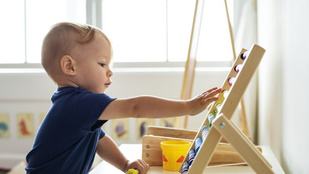
Every child needs to play independently, yet many of us feel that it’s simply impossible to leave our own child on their own. Either they’re too clingy and won’t let us out of their sight, or they’re given too much freedom, which can lead to unwanted mischief. Below, we’ve put together 5 tips that can help in any situation when you’re just starting out.
Children are hard-wired to play. This is how they develop, because it is primarily through this free play that they are able to analyse, interpret and store their experiences of themselves and the world, and transform them into knowledge. They can immerse themselves in it to an incredible depth. They shut out the outside world and give themselves over completely to their imagination. They curl up in a cosy corner of the room and mumble to themselves as they leaf through one book after another. They spend half an hour in front of the mirror, chatting to themselves and playing around. Fleeing from volcanic lava, they jump about the room, or simply keep themselves occupied by filling a bucket, tipping it over and refilling it, entirely on their own, for up to an hour.
Every child, even babies, has an innate need for free and independent play; however, environmental conditions and the quality of the parental background can contribute to this just as much as they can hinder it, if they are unsuitable. There isn’t a parent who wouldn’t like to have a little time now and then (or even more often) to cook in peace, take out the rubbish, or finally sit down and slowly enjoy a cup of coffee (while it’s still hot!). But what can we do if we feel that our child is unable to immerse themselves in an activity independently? If every activity they undertake has to be accompanied by constant attention, correction and supervision, what’s the point of all those toys? In such cases, the child’s natural instincts are being hindered in some way; so, as a solution, we must first examine their environment and our own parental approach, and then make changes. Here’s how to get started!
#1 Watch your child play a few times during the day!
Believe it or not, every child plays on their own, even if not necessarily for very long. Sometimes we simply don’t notice it, either because their activity doesn’t fit our definition of ‘play’ (throwing things about, staring into space, wriggling about), or because, due to our own exhaustion, we fail to appreciate it as it lasts for such a short time. But there are also times when we feel the urge to intervene in their play (with suggestions, praise or corrections), and it doesn’t even occur to us that, in doing so, we are actually preventing them from becoming fully absorbed in it. In order to know which direction we should take to ensure we witness as much independent play as possible, we must first recognise where the problem lies. We need to make a conscious effort to observe our child’s play activities throughout the day, so that we can determine whether it is the environment that requires changes, our own attitude, or indeed both.
#2 Get rid of those toys you no longer need!
The accumulation of toys is a very common problem, and it’s often difficult to do anything about it. Whilst expecting a baby, we try to prepare by buying toys, but then there are the gifts from relatives and friends, as well as the occasional freeloaders who tag along on our shopping trips, courtesy of the marketeers. The fact is that these days, preventing toys from piling up is certainly a bigger challenge than acquiring the necessary quantity. Paradoxically, however, having too many toys has a negative impact on children’s independent play, as it hinders concentration and, consequently, their ability to immerse themselves in play. So, if we’re aware of this, let’s sort out the toys that are no longer of any use to our child – those that are broken, incomplete, have been outgrown, were never liked, are annoying, or are ones we simply can’t stand – and let’s get rid of them! Pass them on, put them in the recycling bin, throw them away – just get them out of the house! Don’t hold on to them in the hope of a miracle!

#3 Keep the games going!
Independent play requires time and space. It requires calm and a clear environment, which allows the mind to see clearly, let go and start working. A messy, cluttered room hinders children’s play because it prevents them from concentrating. As parents, when we have a lot to get through, we often find ourselves just tackling things haphazardly, rather than working through our to-do list in a proper order. We want to save time and make sure we don’t forget anything, so we start on one thing here, then move on to another there. We jump from one thing to another. When a child is surrounded by too many toys and chaos, they too start to jump back and forth between their activities. So there’s no need to have lots of toys on display! Gather up the toys that have been used less in recent days and put them away. We can bring them out again later, when we temporarily put other toys away. This approach will not only help create a tidier space, which in turn will encourage our child to play more deeply, but also provide the novelty of discovering these toys again.
#4 Try playing on your own a few times!
There is no doubt that Children prefer to learn from us, and they do so by imitating us. If we feel that our child doesn’t really know what to do with their toys, let’s help them by setting an example! Without saying a word, let’s get out the Lego box, the dolls’ accessories or the train set, and start playing with them. Our play serves as an invitation to our child, and they’ll be happy to join in. There’s no need to call them over or urge them to do something, as these things can only put them off. We simply need to be open to them joining in, and once they’ve joined the game, we should hand over control (silently, too), or perhaps carry on playing alongside them. By doing this, we’re setting an example for them to let their imagination run wild and follow their own thoughts. Believe me, they won’t need to see this very often before they get the hang of it and start initiating the process themselves more and more often.
#5 Tell him a few times, „Just a moment… I’ll be right back”!
Once we notice that the child is becoming absorbed in playing on their own for a few minutes at a time, we can start practising leaving them to it. Of course, all this must be done with sufficient patience and in a gradual manner. First, notice when they start playing, then wait until you feel they are fully engrossed in it. At that point, say to them: „Just a moment, I'll be right back – I'm just going to fetch the coffee ” – and let’s do exactly that. Our reliability is key to encouraging independent play, as this also reinforces the child’s sense of security. To begin with, we shouldn’t be away for more than 30 seconds! If this goes well, we can gradually increase the time, but we must always do exactly what we said we would! When we return to the room, there’s no need to praise the child or to disrupt their from his play, it will be enough for them simply to notice that we’ve returned. Practising this task will also have a positive effect on your child’s self-confidence, as our departure shows that we trust them and believe that everything will be fine even without our supervision. From there, it’s just a matter of time before we have some real, usable time to ourselves.
Originally published on: divany.hu, 26 April 2021.