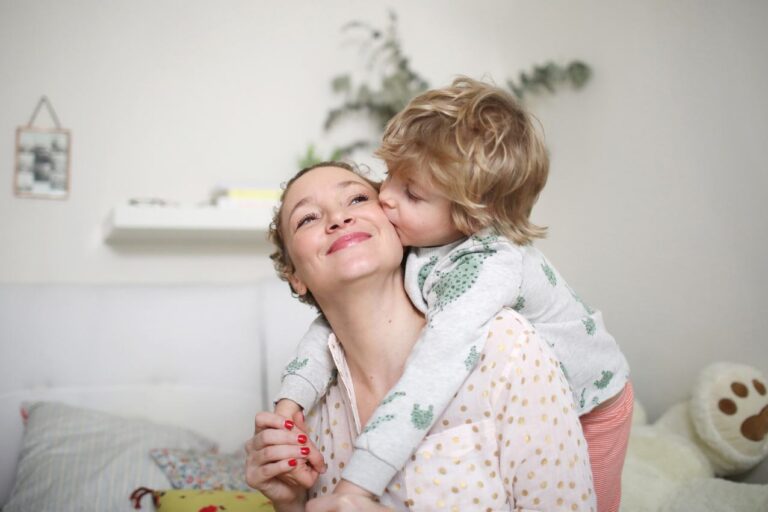
Sofa
A child will be happy if we allow them to feel angry and stressed at times

We all want our children to have a happy childhood, but we often fail to realise that, in order for this to happen, we actually need to accept negative feelings, stress and the ways in which they manifest themselves. For if we are unable to do so, the childhood we want to give our children will not turn out as we had hoped.
As adults, we generally view childhood as a time of carefree and unburdened years spent in Neverland, where life is nothing but play and happiness. Of course, this notion is often immediately debunked when we look back on our own childhoods, but when it comes to our own children, we still want to hold on to this belief. It is in our nature as parents to strive for the happiness of our children, and to do everything we possibly can to ensure it.
However, our attachment to the idyllic image of a carefree childhood can easily blind us, and this can have a negative impact on our relationship with our children. If we are to be honest, we must recognise that we are mistaken in thinking of childhood as a time free from worries. Even if we, as parents, were able to create perfect conditions for our children’s physical and mental wellbeing (which is in itself a utopian endeavour), we cannot spare them from their own inner struggles, which arise from their development. And if we do not provide them with the opportunity to express these feelings, we may well end up creating the very childhood we do not want to believe in. A childhood devoid of happiness.
Children experience stress too
But he’s only a child, after all – come on, what could he possibly be stressed about? – that’s the phrase so many adults utter, so thoughtlessly. Many, there can be countless reasons why children experience inner tension and anxiety. Whether we’re talking about tiny babies, nursery-age children or schoolchildren, every age group has its own challenges. They face a great deal of stress on a daily basis, which they find much harder to cope with more helpless, unlike adults. To begin with, in their world, it is still their parents who are in charge, which means they often have neither a say nor any influence over the events affecting them: the arrival of a younger sibling, moving house, hidden conflicts at home or attending an institution, to mention just the most obvious examples.
Their situation is further complicated by the fact that the true cause of the internal tensions they are experiencing is not clear to them, and this can further heighten their frustration. They do not know why they feel bad, nor do they know what they can do about it, because the part of their brain responsible for regulating these feelings – which does not fully develop until they are around 25 years old – is not yet mature enough for the task. So they fidget helplessly and instinctively resort to behaviours that, in childhood, can help relieve these unpleasant feelings: they wrestle aggressively, play with toys inappropriately, use bad language, draw in dark colours, and invent cruel stories. And as parents, in the name of their happiness, we often try to stop them from doing these things too.
The paradox of a carefree childhood
The child’s stress-relief methods mentioned above are indicative for us. They reveal that the child is struggling with internal difficulties, triggered either by their environment or simply by their own personality development. In such situations, certain circumstances require us to lend a helping hand and, to prevent any mishaps, suggest alternative ways of expressing stress; but often it is enough simply to leave them to it.
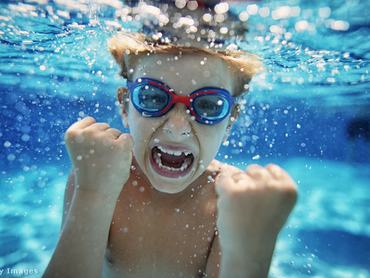
To achieve this, however, we must let go of our need to always see our child as carefree. By clinging to the magical image of a „happy childhood”, we often not only fail to lend our child a helping hand, but also (without being particularly aware of it) sabotage the stress-relieving strategies they instinctively employ. Our communication (comforting, criticising, trivialising) and our actions (prohibiting, punishing, controlling) all reflect rejection. Rejection in times of trouble. To ensure a happy childhood, therefore, we should actually accept negative feelings, stress and its manifestations.
We need a dimension where the child can take precedence over the parent
We need to realise that we all have a brighter, happier side, and a darker, more melancholic one. This kind of duality applies to our whole world, so it is also reflected in our children’s behaviour and conduct. We need not be alarmed by the fact that they are easily provoked into aggression (playful wrestling), that they’re only willing to paint with black, that a wooden block is always a weapon, or that in stories and puppet shows, the adult characters always come to harm.
We might say that „his soul is dark”, but we must recognise that these coping mechanisms enable him to restore the emotional balance that has been disrupted by stress. Most of the examples listed are excellent ways of self-expression, whilst also being harmless, so it is worth allowing them – and perhaps even encouraging them. Aletha J. Solter Therapeutic and related games In his book of the same title, alongside a wealth of useful advice, he also emphasises that children must find a way to gain the upper hand over their parents. The game, stories and artistic activities transport the child into another dimension, where they can act upon their inner, unarticulated and uninterpreted desires without fear of consequences. But this is only possible if we, as adults, allow it, and recognise these emotional expressions for what they are: natural, internal tensions that the child needs to release.
We will not ruin a child’s happy childhood by doing this, but rather by forcing them to be happy. Stress is part of life; it cannot be eliminated, but if we allow it – and perhaps teach our children to express it – we can offer them a more carefree childhood right from the start. And that is what happiness requires.
Originally published on: divany.hu, 23 March 2021.