Sofa
That’s why it’s not a good idea to keep dragging your child off to developmental classes
Whilst baby gyms, baby yoga, music classes and numerous other similar structured activities are enjoying ever-increasing popularity, the time children have set aside for free play is – according to experts – declining at an alarming rate. This draws our attention to a serious problem, as the two are not mutually exclusive.
In recent decades, the range of different educational activities aimed at children has grown spectacularly. An ever-wider variety of enjoyable and genuinely effective guided, group activities have become available, where children, from a very young age, can develop their skills through shared play, deepen their bond with their parents, and, incidentally, burn off what might be considered excess energy. However, whilst these playgroup sessions, baby yoga classes, music nurseries and other similar guided activities are enjoying ever-increasing popularity, experts according to – The time children have set aside for free play is falling alarmingly. This is a serious problem, as the two are not mutually exclusive. Although various developmental activities can often help with a child’s proper development and boost parental confidence, the power of free play to influence development is decisive. Suppressing or excessively restricting children’s innate drive towards this will have a negative impact on their emotional and behavioural self-regulation, their problem-solving and experience-processing abilities, and indeed their overall self-esteem.
What is free play?
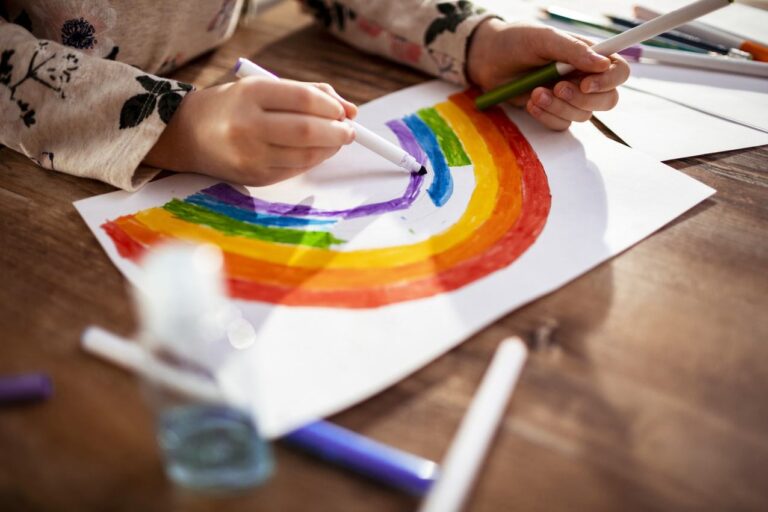
Play – and, within that, free play in particular – is what most defines childhood. This is no coincidence, as this activity is our most important tool for comprehensive personality development, serving a child’s development in every tiny detail. It helps children to process their experiences, express their emotions, organise their experiences, learn patterns, and think creatively, to name but a few. And all this takes place without any external guidance or direction!
The essence of free play is that it is free from any external goal; it is fuelled by the experience derived from the activity itself, whilst the information gained through it also shapes a unique (and highly effective) learning process. Children are born with an innate, instinctive urge to play. They see play in everything; it’s just that we often fail to notice it. A baby sees play in gazing intently at the colourful garland hanging above its head, or in trying to reach for something, or perhaps in getting to know its own voice. As they get a bit older, they might be wobbling in front of the mirror, or dragging themselves along the floor, or perhaps imitating us.
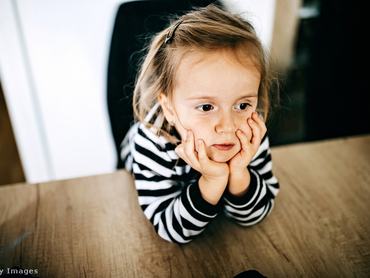
To us, it might seem like nonsense, or perhaps even a bit of a bore, but to them it’s a game. The little cogs in their heads are certainly turning at full speed. They’re practising controlling their bodies, influencing their environment, testing the accuracy of their knowledge, interpreting their emotions and enjoying the freedom their imagination affords them. Free play fulfils important needs, and this cannot be replaced by structured, playful activities. Our children need ‘me-time’ too – time when they don’t necessarily get our attention, but rather the solitude they require.
Neglect or trust?
The importance of free play and the emphasis placed on it do not mean that various guided, developmental activities are of no use. They have their place in child-rearing, as they help to address any developmental delays, in channelling children’s pent-up energy, and indeed, in many cases, in meeting parents’ social needs. Sometimes, however, we fear boredom, that our child might be neglected, or that we are unsuitable as playmates, and so we want to rid ourselves of what we perceive as empty moments. We don’t want our child to be lonely or antisocial, nor do we want them to think we don’t care about them.
Free, independent play is a real joy for children. They don’t just put up with it; they actually crave it, provided they’ve had the chance to practise it from an early age instead of passive entertainment (screen time). They retreat to a corner to look at a storybook, talk to themselves whilst playing with their toys, toss blocks about, or simply roll around silently on the carpet staring at the ceiling, and in doing so: they absorb what they have observed from adults, process the events affecting them, express their pent-up feelings, and find harmony within themselves. Through free play, they practise understanding themselves, solving their own problems and developing their skills.
Would ensuring this be a form of neglect? No. On the contrary, supporting this shows that the parent has faith in their child: in their resourcefulness, their ability to cope, and the gradual and continuous development of their self-regulation skills.
Let’s not rush our children! Neither their development nor their performance, because rushing and overloading them will never yield the results they are capable of! The foundations must be laid properly, which requires time, patience and calm. Our world has sped up, and we’re increasingly caught up in that pace too, even though we don’t need it – and our children certainly don’t. The free play is able to lay the most solid foundations, together with the safe and trusting environment provided by the parent. To achieve this, we must set aside sufficient time to allow all this to happen without a hectic pace or external control.
Originally published on: divany.hu, 27 April 2021.