Sofa
Is your baby a poor sleeper? It might be down to the lighting conditions
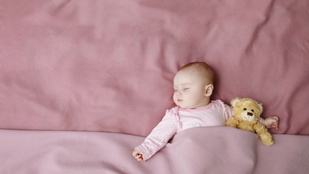
Studies have shown that exposure to bright light at the wrong time of day can cause phase shifts, that is, alter the body’s natural circadian rhythm and, consequently, disrupt restful sleep. What’s more, it seems that it is not only the amount of light a child is exposed to whilst sleeping that matters, but also the type of light.
Putting babies to sleep is a real nightmare for many parents. Struggles at bedtime, sleepless nights or waking up every hour during the night can drive parents to utter despair. They become exhausted, feel uncertain and worry that this unresolved problem will ruin everything. Putting a baby to sleep is one of the most common concerns for parents, and the more they try to find a solution, the more conflicting information they come across. There are hundreds of articles, methods and books on the subject, which only adds to the pressure on parents.
Sofia Axelrod, a researcher at the Genetics Laboratory at Rockefeller University in New York, has recognised this problem and is working to provide scientific explanations to help her fellow parents who are desperately exhausted and lost in the deluge of information. Published in 2020, What helps a baby sleep well? In his book of the same title, he has compiled all the research findings that help us understand which factors influence the development of infants’ sleeping habits, and how. She writes about daily routines, feeding, consistency and the scientific links between all these factors and the biological clock. One of the book’s most interesting features, however, is that, alongside explanations of the usual fundamental principles, a separate section is devoted to the significance of daylight and artificial light. It seems that it is not only the amount of light a child is exposed to whilst sleeping that matters, but also the type of light.
Babies’ internal clock and light
More than 35 years of research has shown that we have genes which regulate our behaviour and bodily functions so that we are prepared for the events that lie ahead: waking, sleeping, eating, moving, feeling the cold, and so on. These genes constitute what is known as our biological clock. We all have an internal clock, a roughly 24-hour rhythm, which signals at the optimal time when we should eat, be active or sleep. The main question is: what sets this clock?
The answer is essentially complex, as it involves several factors, known as time constants ((zeitgeber) plays a part in this, as does eating, for example – but the most significant influencing factor is light. When we draw back the curtains in the morning, the incoming light activates special cells at the back of our eyes (the photosensitive retinal ganglion cells), which inform our internal clock that the day has begun. At this point, the internal clock resets. Those whose 24-hour rhythm is properly synchronised no longer need an alarm clock, light or any other stimulus to wake up at this time, as, through habit, all their internal bodily processes have adapted to this rhythm. However, the calibration of the internal clock to environmental factors depends on the types of time cues we provide at the outset. Light is the most powerful of these cues, yet there are several types, each of which affects our bodies differently. The intensity, colour (wavelength) and timing of the light within the course of the day all matter.
The effect of light on sleep
Studies have shown that exposure to bright light at the wrong time can cause phase shifts, in other words, alter our natural biological clock. According to one experiment, if, for example, we are exposed to bright light at the start of the night for three days, this can result in a shift of up to twelve hours. And that’s not all. The wavelength of light – which is essentially its colour – also has different effects on wakefulness and sleep.

Our main source of light is essentially the sun, the colour composition of which changes continuously throughout the day as time passes. Whilst morning sunlight contains more blue light and less red, this ratio gradually reverses as sunset approaches. Linking all this to sleep, researchers have found that the shorter the wavelength of light (i.e. the bluer or whiter it is), the more detrimental its effect on sleep, and the longer the wavelength (the redder the light), the less so. Blue light wakes babies up because it causes levels of the body’s activity hormones (cortisol, serotonin) to rise. In contrast, red light enhances the feeling of sleepiness, as its effect on the body actually raises levels of melatonin, the sleep hormone. Whether we’re talking about sunlight or artificial light, the overall result remains the same.
Avoid blue light to help you sleep better!
Mobile phones, televisions and LED bulbs – although there may be some variation between them – all emit blue light, which has a stimulating effect. Axelrod draws our attention to the fact that, contrary to popular belief, the type of light our baby is exposed to whilst sleeping does indeed matter. He does not claim that children should sleep in complete darkness under all circumstances, as there are some who are less irritable, or they may adapt more easily to light stimuli, but for those who experience sleep problems, it will make a difference. With babies who wake up several times during the night and need to be fed and changed, we are forced to use some form of light source. To help them get back to sleep more easily, Axelrod recommends replacing the light bulbs in the room with ones that emit a red or similar colour, if possible. These bulbs provide enough light for us to carry out our tasks, whilst not hindering the rise in our baby’s sleep hormones. This method has already helped countless families, so it’s definitely worth a try; however, we mustn’t forget that light – although the most powerful factor – is not the only thing that can help.
A What helps a baby sleep well? The book, entitled [title], draws on further research to support the development of a suitable daily routine, the organisation of meals, the consistent the beneficial effects of a positive attitude and, last but not least, of repeated rituals on sleep. We all want our children to be good sleepers, so that they can develop healthily and we, in turn, can feel more rested. Unfortunately, no one can guarantee exactly what will work for whom, as there are individual differences; nevertheless, research shows that certain basic principles always hold true, and it is the effectiveness – or at most the intensity – of the solutions that is open to question.
Originally published on: divany.hu, 29 January 2021.